


Choosing the right accounting software is one of the biggest decisions a small business owner will make for their business finances. The right accounting software saves you hours every month, keeps your records accurate, and takes the stress out of tax time. The wrong choice means paying for advanced features you never use, or missing the ones you actually need.
This page compares the most popular accounting software options for UK small businesses in 2026 side by side, including price, free trials, Making Tax Digital compatibility, and feature-by-feature details across bank feeds, invoicing, expense tracking, payroll, and reporting. It is built for quick comparison rather than a full review of each package. If you want fuller reviews with pros, cons, and who each package suits best, see our Best Accounting Software for Small Business guide instead.
At a Glance: Our Top Picks
- Xero – strong all-rounder for growing businesses working with an accountant
- QuickBooks Online – good fit for freelancers and self-employed people
- Sage UK – Free plan for Sole traders; best for small businesses wanting AI-powered tools and a no-cost option
- Tide – banking and accounting tools together for sole traders
- Zoho Books – generous free version with a generous feature set
- FreshBooks – built around service businesses needing time tracking and professional invoices
Accounting Software Best Deals
XERO – 80% Discount for 6 Months – Cloud accounting, unlimited users, bank feeds, MTD compatible

QuickBooks – 90% off for 7 Months – Sole traders, easy to use, MTD-compatible

Tide – Free with Tide Bank Account – All your banking and accounts in one place, MTD compatible
Making Tax Digital: What Every UK Business Needs to Know
Before comparing accounting software packages, it is worth understanding how Making Tax Digital affects your accounting software choice. MTD is HMRC’s programme to move tax record-keeping and submissions to approved third-party software, and it now affects most UK businesses.
Disclosure: This content may contain affiliate links, which means if you click on them, I may get a commission (without any extra cost to you).
MTD for VAT has applied to all VAT-registered businesses since April 2022, regardless of turnover. If your business is VAT-registered, you must maintain digital records and submit VAT returns using MTD-compatible software.
MTD for Income Tax is being introduced in phases for sole traders and landlords:
- From 6 April 2026: mandatory for those with qualifying gross income over £50,000
- From 6 April 2027: mandatory for those with qualifying gross income over £30,000
- From 6 April 2028: mandatory for those with qualifying gross income over £20,000
When MTD for Income Tax applies to you, you must maintain digital records, submit quarterly updates to HMRC, and file a Final Declaration replacing the traditional Self Assessment return, choosing accounting software that is already MTD-ready means you will not need to switch later.
💡 Tip: Choosing an accounting solution that is already MTD-compatible now, even if you are not yet within the mandatory thresholds, means you will not need to switch software later when your start date arrives. FreshBooks is MTD VAT only.
Compare Accounting Software: Current Deals
Most providers offer a significant introductory discount to attract new customers. Always check the full price once the deal period ends before committing.
| Software | Starting Price | Current Offer | Free Trial |
|---|---|---|---|
| Xero | From £16/month | 80% off for 6 months | 30 days |
| QuickBooks Online | From £10/month | 90% off for 7 months | 30 days |
| Sage UK | From £15/month | 90% off for 6 months | Yes |
| Sage UK (Sole Trader) | Free | Free tier available | Yes |
| Tide | Free (bank account) | 2 months free Admin Extra | Yes |
| Zoho Books | From £12/month | Free tier for low income | 14 days |
| FreshBooks | From £15/month | Check current offer | 30 days |

Compare Bank Feeds, Reconciliation and Banking Features
Automatic bank feeds and bank reconciliation are two of the most time-saving accounting software features, pulling transactions directly from your bank accounts so you do not have to enter them by hand.
| Feature | Xero | QuickBooks | Sage | Tide | Zoho Books | FreshBooks |
|---|---|---|---|---|---|---|
| Automatic bank feeds | Yes, most UK banks | Yes, most UK banks | Yes, most UK banks | Built in (own account) | Yes | Yes |
| Bank reconciliation | Yes, fast and accurate | Yes | Yes | Built in by default | Yes | Yes |
| Connect external bank accounts | Yes | Yes | Yes | Yes | Yes | Yes |
| Import bank statements manually | Yes | Yes | Yes | Not usually needed | Yes | Yes |
| Multi-account bank integration | Yes | Yes | Yes | Yes | Yes | Limited |
| Visit Xero | Visit QuickBooks | Visit Sage UK | Visit Tide | Visit Zoho Books | Visit FreshBooks |
Because Tide is a business bank account with built-in accounting, its bank feeds and reconciliation happen automatically within the same platform, rather than as a separate integration.

Compare Invoicing and Online Payments
All six options let you send invoices, but the quality of professional invoices, payment links, and reminders varies.
| Feature | Xero | QuickBooks | Sage | Tide | Zoho Books | FreshBooks |
|---|---|---|---|---|---|---|
| Send invoices | Yes | Yes | Yes | Up to 3 free/month, unlimited on paid plans | Yes | Yes |
| Send professional invoices with your logo | Yes | Yes | Yes | Yes, on paid plans | Yes | Yes |
| Online payments accepted | Yes | Yes | Yes | Yes | Yes | Yes |
| Automatic payment reminders | Yes | Yes | Yes | Yes, paid plans | Yes | Yes, a key strength |
| Client portal for invoice clients | Yes | Yes | Limited | No | Yes | Yes |
Compare Expense Tracking, Inventory Management and Stock
If your business holds stock or you need to manage expenses closely, check this table before making a choice.
| Feature | Xero | QuickBooks | Sage | Tide | Zoho Books | FreshBooks |
|---|---|---|---|---|---|---|
| Expense tracking | Yes | Yes | Yes | Auto-categorisation | Yes | Yes |
| Employee expenses management | Yes | Yes | Yes | Limited | Yes | Yes |
| Receipt capture via mobile access | Yes | Yes | Yes | Yes | Yes | Yes |
| Inventory management | Yes | Yes, add-on | Yes, higher plans | No | Yes | No |
| Advanced inventory tracking | Yes | Limited | Limited | No | Yes | No |
| Accounts payable | Yes | Yes | Yes | No | Yes | Limited |
| Accounts receivable | Yes | Yes | Yes | Yes | Yes | Yes |
Xero and Zoho Books offer the strongest inventory management and advanced tracking in the group, which matters if you hold physical stock. FreshBooks does not offer inventory tracking at all, reflecting its focus on service businesses rather than product-based ones.

Compare Payroll, Multi-Currency Accounting and CIS
| Feature | Xero | QuickBooks | Sage | Tide | Zoho Books | FreshBooks |
|---|---|---|---|---|---|---|
| Payroll software | Add-on | Add-on, included on higher plans | Add-on | No | Not currently | No |
| Multi-currency accounting | Yes | Yes | Yes | No | Yes | No |
| CIS (Construction Industry Scheme) support | Yes | Yes | Yes | No | No | No |
None of these packages files Corporation Tax directly. HMRC has confirmed MTD for it will not be introduced, so limited companies should continue filing returns as normal via GOV.UK or through their accountant.
Compare Cash Flow, Reporting and Analytics
| Feature | Xero | QuickBooks | Sage | Tide | Zoho Books | FreshBooks |
|---|---|---|---|---|---|---|
| Financial reports (profit and loss, balance sheet) | Yes, | Yes | Yes | Basic | Yes | Yes |
| Cash flow management tools | Yes | Yes | Yes | Basic | Yes | Limited |
| Cash flow forecasting | Yes | Yes | Yes | No | Limited | No |
| Advanced reporting | Yes | Yes | Yes | No | Yes | Limited |
| Advanced analytics | Yes | Yes | Yes, via Sage Copilot | No | Limited | No |
| Tax preparation support | Yes | Yes | Yes | Yes, Self Assessment focus | Yes | Yes |
| Double entry accounting | Yes | Yes | Yes | Yes | Yes | Yes |
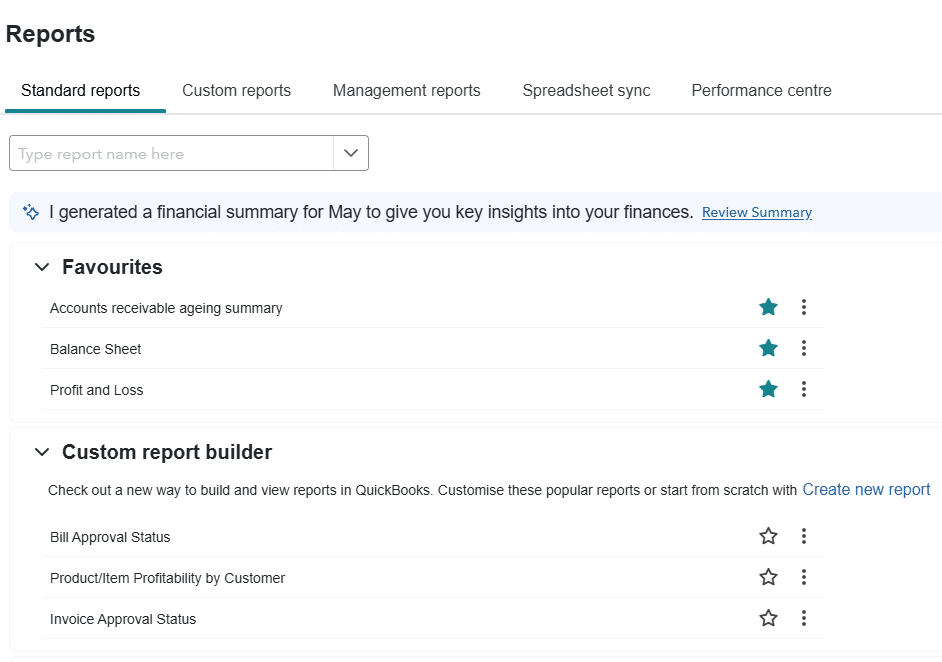
Xero’s reporting is generally considered the most advanced of the group, which is part of why it is popular with accountants who need to pull detailed reports for tax preparation and business decisions.
Compare Mobile Access, Multiple Users and App Integrations
| Feature | Xero | QuickBooks | Sage | Tide | Zoho Books | FreshBooks |
|---|---|---|---|---|---|---|
| Mobile access (iOS and Android) | Yes | Yes | Yes | Yes | Yes | Yes |
| Multiple users included | Unlimited, all plans | Limited by plan | Limited by plan | Limited by plan | Limited by plan | Limited by plan |
| Third-party app integrations | 1,000+ | Hundreds | Hundreds | Integrates with Xero | 40+ Zoho apps | Moderate |
| Project management features | Yes | Limited | No | No | Yes, | Yes, a key strength |
| Project tracking and project accounting | Add-on | Limited | No | No | Yes | Yes |
Xero’s unlimited users on every plan is one of its clearest advantages if your accountant, bookkeeper, or business partner also needs access, since some other providers charge extra once you go beyond one or two users. Visit Xero
Compare Ease of Use, Automation and Advanced Accounting Features
Some of these packages are built for people with no accounting background; others assume more confidence with numbers. This matters as much as price if you are managing your own books rather than handing everything to an accountant.
| Feature | Xero | QuickBooks | Sage | Tide | Zoho Books | FreshBooks |
|---|---|---|---|---|---|---|
| Beginner-friendly, low learning curve | Moderate | Yes | Yes | Yes | Moderate | Yes |
| Automate tasks (recurring invoices, reminders, categorisation) | Yes | Yes | Yes, via Sage Copilot | Yes | Yes | Yes |
| Advanced accounting features for growing businesses | Yes | Limited | Yes | No | Yes | Limited |
| Self Assessment support built in | Via accountant | Yes | Yes | Yes, a key strength | Limited | Limited |
| Maintain digital records for MTD | Yes | Yes | Yes | Yes | Yes | Yes |
Xero, QuickBooks, Sage, Tide, and FreshBooks are generally the fastest to pick up without a steep learning curve, which matters if you are a sole trader managing your own business finances rather than working with a bookkeeper. Xero and Zoho Books offer more advanced accounting features and automation, which growing businesses tend to use more fully once they scale.
Which Accounting Software Suits Your Business Size?
Not every package is built for the same business size. A basic package that works well for a very small business may not have the advanced accounting features a medium business needs once it takes on staff, holds stock, or invoices in multiple currencies.
| Business type | Best-suited options |
|---|---|
| Very small businesses, just starting out | Zoho Books (free version), Tide (free bank account), Sage (free sole trader plan) |
| Sole traders and freelancers | QuickBooks Online, Tide, FreshBooks |
| Service businesses invoicing by time or project | FreshBooks, Zoho Books |
| Small businesses holding stock | Xero, Zoho Books |
| Growing or medium business with a team | Xero (unlimited users), Sage (higher plans) |
| Businesses already banking with NatWest, RBS, or Ulster Bank | FreeAgent (often free through the bank) |
Among the most popular small business accounting software options for UK small business owners, QuickBooks and Xero cover the widest range of business sizes between them, from a single sole trader on a basic package through to a medium business needing advanced reporting and multiple users.
The Short Version: Which Accounting Software Cost and Fit Suits You
Xero suits growing businesses, particularly those already working with an accountant or bookkeeper. Its strengths are unlimited users on every plan, detailed and customisable reports, and the widest range of app integrations of any package here. It is a strong pick if your business is likely to grow in size or complexity over the next few years.
QuickBooks is aimed at freelancers, the self-employed, and small limited companies that want an easy-to-use dashboard with a low learning curve. Mileage tracking via mobile access is a genuine strength for anyone who drives for work, and it has the lowest entry price on this page.
Sage UK is one of the most established UK accounting software brands and has invested heavily in AI-powered tools through Sage Copilot. Its free plan for sole traders is genuinely useful, giving small business owners an MTD-compatible option at no cost before they need to move to a higher plan.
Tide takes a different approach from the rest: rather than standalone software, it combines a free business bank account with built-in, HMRC-recognised accounting tools. Bank feeds and reconciliation happen automatically since banking and bookkeeping share the same platform. Note that Tide Accounting does not currently support the VAT Flat Rate Scheme, so check compatibility first if you use that scheme.
Zoho Books has one of the most generous free plans on the market for businesses under £35,000 turnover, plus solid project management features on paid plans, making it a practical accounting solution for very small businesses just getting started with digital records.
FreshBooks is built for service businesses and freelancers who invoice clients by the hour or by project. Its time-tracking and project-management features are genuine strengths, though it lacks inventory tracking, so it suits businesses that sell time rather than stock.
Also worth a look: FreeAgent is free for NatWest, Royal Bank of Scotland, and Ulster Bank business account holders and is worth checking before paying for an alternative. QuickFile is a free option for businesses with fewer than 1,000 transactions a year.
For fuller reviews of features, pricing, and who each package suits, see our Best Accounting Software for Small Business guide.
Cloud-Based Accounting Software: Why It Is Now the Default
Almost all accounting software for UK small business owners is now cloud-based rather than installed on a single computer. Cloud based software means your data is stored securely online and accessible from any device, with automatic bank feeds, automatic software updates, and the ability for your accountant to log in and work alongside you in real time. The main trade-off with cloud-based accounting software is an ongoing monthly subscription rather than a one-off purchase, though the paid plans and free trials on this page make it easy to test before committing.
FAQ
Summary
Comparing small business accounting software side by side comes down to a handful of genuine differences once you look past the marketing. QuickBooks Online and Xero remain the two most widely used packages among UK small business owners, and both are MTD-compatible for VAT and Income Tax, with QuickBooks better suited to sole traders wanting a simple, accessible interface and Xero better suited to growing businesses working with an accountant.
Sage stands out for its free plan for sole traders and its AI-powered tools, while Tide is the only option here that bundles a business bank account with accounting tools in one place. Zoho Books has the strongest free version for very small businesses, and FreshBooks is the clear pick for service businesses that invoice by time or project rather than holding stock.
Test two or three options using the free trials before committing, since switching providers later means transferring your records across and re-entering opening balances. Whatever you choose, confirm current MTD compatibility directly with the provider and check GOV.UK for the latest thresholds and requirements, as these are subject to change.
Related Pages on Business Accounting Basics
- Best Accounting Software for Small Business
- Making Tax Digital for Income Tax
- Free Software
- Xero Review
- QuickBooks Review
- Sage Review
Last updated: June 2026
