


Managing business expenses doesn’t have to be complicated. Whether you’re a sole trader, small business owner, or employee claiming back costs from your employer, having a clear record of what you’ve spent and why is essential for your accounts and for HMRC.
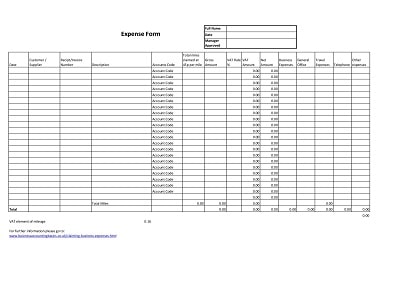
This page provides two free Excel business expense templates to download: one for VAT-registered businesses and one for non-VAT businesses. Both are straightforward to use, work in Microsoft Excel, Google Sheets, and other spreadsheet apps, and automatically calculate your totals once you’ve entered your figures. Includes mileage at new rates from April 2026 at 55p per mile.
At a Glance
Disclosure: This content may contain affiliate links, which means if you click on them, I may get a commission (without any extra cost to you).
- Free to download — see the licence agreement below before use
- Two free templates available — one for VAT-registered businesses, one for non-VAT businesses
- Records mileage, subsistence, travel, and general business expenses
- The VAT template automatically calculates VAT once the rate is entered
- Includes drop-down account codes to categorise expenses
- Includes a manager authorisation section for employee expense claims
- Works in Microsoft Excel, Google Sheets, and other spreadsheet apps
If you’re unsure what expenses your business can claim, our claiming business expenses page is a good place to start.
Alternatives to the Excel Expense Template
Using our expense report template is an easy option for small businesses that need to track expenses. Investing in accounting software, including a mobile app or expense management software, is worthwhile.
Small Business Accounting Software
Although our small business Excel spreadsheet is easy to use, there are alternatives for tracking expenses. A good accounting software package like QuickBooks has an app to record mileage and photograph receipts. It keeps all your accounting in place. Below are some excellent accounting software packages that include expenses.
Business Expense Management Software
Small-business software such as PLEO, Payhawk, or Airwallex can be used to manage business expenses. This software easily tracks and records actual business expenses, helping business owners manage their finances.
Business expenses can be categorised for easy tracking, and business owners can set employee budget limits. This software can also generate reports on business spending, helping decide where to cut costs.
Using business expense-tracking software like Pleo can help business owners save time and money by keeping track of their expenses.
Instructions for Small Business Monthly Expense Template
Follow the basic steps below to complete the expense claim form spreadsheet.
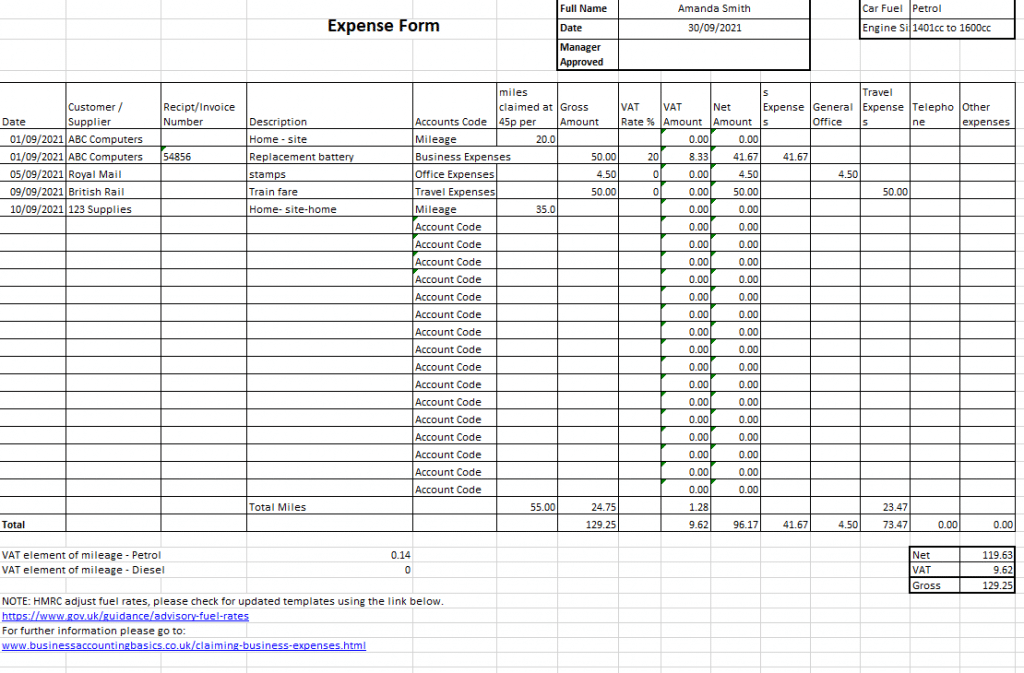
Download the correct template below to track business expenses, depending on whether you are registered for VAT. The expense claim form templates are created to calculate all the figures for you; this is especially useful for a VAT-registered business.
Complete the section at the top right, including name, date, and, if needed, authorisation signature. If you have a receipt to claim with multiple expenses, each expense will need its own line.
Excel Expenses Claim Form Template UK – VAT Mileage
As set by HMRC, the standard mileage allowance you can claim for business travel is 55p per mile (from April 2026) for the first 10,000 miles and then 25p per mile after that. It covers the cost of running your vehicle, including fuel, insurance, and maintenance.
To claim the mileage allowance, you must keep a log of your business travel, including the dates, distances travelled, and the purpose of the journey. You can then claim the allowance on your expenses report. Remember that you can only claim for business travel, not personal travel.
If you are VAT registered and claiming mileage at 55p per mile, you can only claim part of the amount as VAT. This amount varies depending on fuel type and engine size. HMRC regularly updates these figures, so you will need to visit their website and update the figures on the spreadsheet.
Our VAT spreadsheet has accounted for the different rates. Use the drop-down list to choose the correct fuel type and engine size rate.

Receipt Details
When you spend money from the receipt for the expenses incurred, enter the date, who the receipt is from, the receipt or invoice number and a brief expense description. All this information is helpful if you need to refer back to a receipt. You will need to keep the receipt in case HMRC requires it.
Free Excel Business Expense Spreadsheet – Accounts Code
There is a drop-down list of different account codes that can be used. Click the arrow to display the list, then click the required code. It will automatically post the net figures to the correct column.
Total Mileage

If you are claiming mileage, enter the total number of miles claimed, calculated at 55p per mile (from April 2026). Contact us for a different template if you claim over 10,000 miles annually. The mileage figure is calculated as a total at the bottom.

There are special rules for claiming VAT on mileage, as you can only claim the allowance’s petrol, diesel or electric element. If this figure changes, you can adjust the VAT element figure in the Accounts tab of the spreadsheet.

Current advisory fuel VAT rates are on the HMRC website. When you download the template, check the current rates and, if they differ, adjust them in the spreadsheet. There are additional rates for electric vehicles, 7p for home charging and 15p for public charging. If you use a mix of home and public charging, you can apportion the rate accordingly.
We also have a separate mileage form available.
Tip: Always keep original receipts, including petrol, as HMRC may ask to see them.
Gross Amount
Enter the total amount that you wish to claim against the account code.
VAT rate
If you are VAT-registered, enter the VAT rate shown on the invoice. The current standard rate is 20 per cent. All the figures will then be calculated for you. If there is no VAT, either leave it blank or enter 0. For mileage, leave it blank as the VAT figure is calculated once you enter the vehicle details.
Template Totals
Once all the expenses are entered, the bottom row of the expense template will show the total, the VAT amount, and the total for each expense type. Enter these amounts into your accounts monthly and refund the employee.
Changes to the Business Expense Report Template
Please email the details if you need any changes to the business expenses spreadsheet template for the UK. There would be a small fee, typically £5, for small changes.
FAQ Small Business Expenses
Licence Agreement to Download Business Claim Expenses Template
By downloading the Monthly Expenses template, you agree to our licence agreement, which allows you to use the template for your personal or business use only. You may not share, distribute, or resell the templates to anyone else in any way.


Related Resources and More Templates
Free Excel Bookkeeping Templates – Free download of 25 spreadsheets
Claiming Home Office Expenses – Claiming Home Office expenses can be complicated; we have therefore created a template to help with the process. Full instructions are provided. There is also a simplified expenses, where you can claim a fixed amount per month.
Mileage expense form – A separate mileage expense form to record business journeys.
Business Budget Template – Our small business budget template allows you to set a budget and record the business income and expenses for the same period. The results will show any difference between the budget and actual costs.
Conclusion for Expense Report Template
Our free Excel business expense templates are a straightforward way for sole traders, small business owners, and employees to record and claim business costs each month. Simply download the correct version for your business — VAT or non-VAT — enter your expenses as you go, and the template will automatically calculate your totals. Both templates work in Microsoft Excel, Google Sheets, and other spreadsheet apps.
When claiming mileage, the HMRC-approved rate is 55p per mile for the first 10,000 business miles in a tax year, then drops to 25p per mile thereafter. Always keep your original receipts alongside the completed template — HMRC may ask to see them, and a spreadsheet entry alone is not sufficient evidence of a claim.
Last updated: April 2026
Disclaimer: This template is provided for general bookkeeping purposes and is not a substitute for professional tax advice. Check that it suits your circumstances and review current HMRC requirements before submitting information.
