


What is Working Capital? Meaning, Formula and Calculation
Learn how to calculate working capital and what the result tells you about your business.
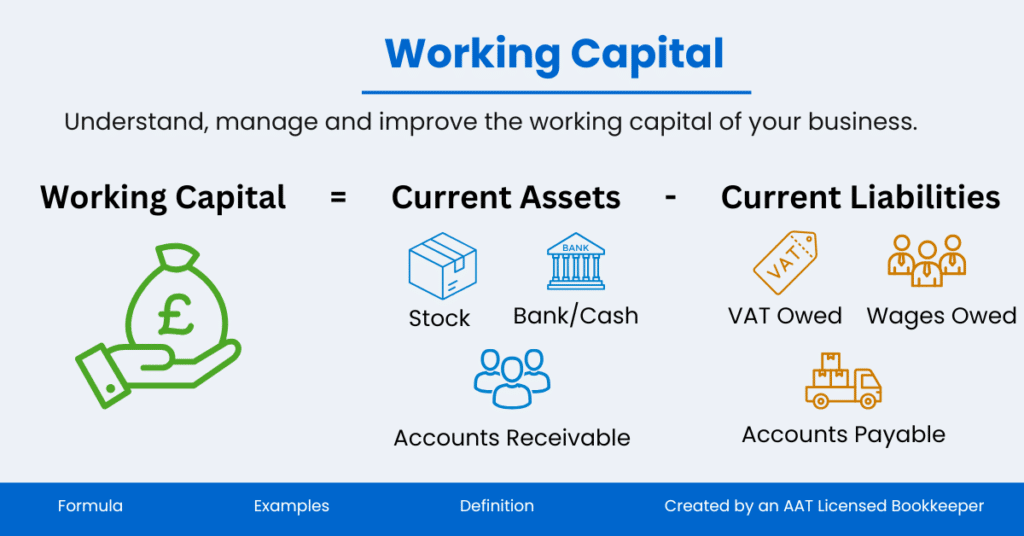
Working capital is the money a business has available to meet its day-to-day operations. It is calculated by comparing current assets, such as cash, stock and money owed by customers, with current liabilities, including supplier bills, tax and short-term debts.
Understanding your working capital can help you see whether your business is in a strong enough financial position to pay its bills and continue operating. A profitable business can still experience financial difficulties if too much money is tied up in stock or unpaid customer invoices.
At a Glance
- Working capital = Current Assets − Current Liabilities
- Positive working capital means current assets are greater than current liabilities.
- Negative working capital means the business owes more in the short term than it has in current assets.
- Working capital is not the same as cash or profit.
- Managing stock, collecting customer payments and planning upcoming bills can all affect working capital.
What is Working Capital?
Working capital measures a business’s short-term financial position. It shows the difference between the assets expected to be converted into cash within the short term and the amounts the business needs to pay within the same period.
Disclosure: This content may contain affiliate links, which means if you click on them, I may get a commission (without any extra cost to you).
For example, a business may have money in its bank account, stock available to sell and invoices awaiting payment from customers. These are current assets. At the same time, it may have supplier invoices, VAT, tax or loan repayments that need to be paid. These are current liabilities.
Comparing the two gives you working capital and indicates whether the business has enough short-term resources to meet its financial obligations as they fall due.
You can find the figures needed to calculate working capital on the balance sheet. Current assets and current liabilities are usually shown as separate sections on the balance sheet, making it easy to identify the totals needed for the calculation.
How to Calculate Working Capital
Working capital is calculated using the current assets and current liabilities shown on your balance sheet.
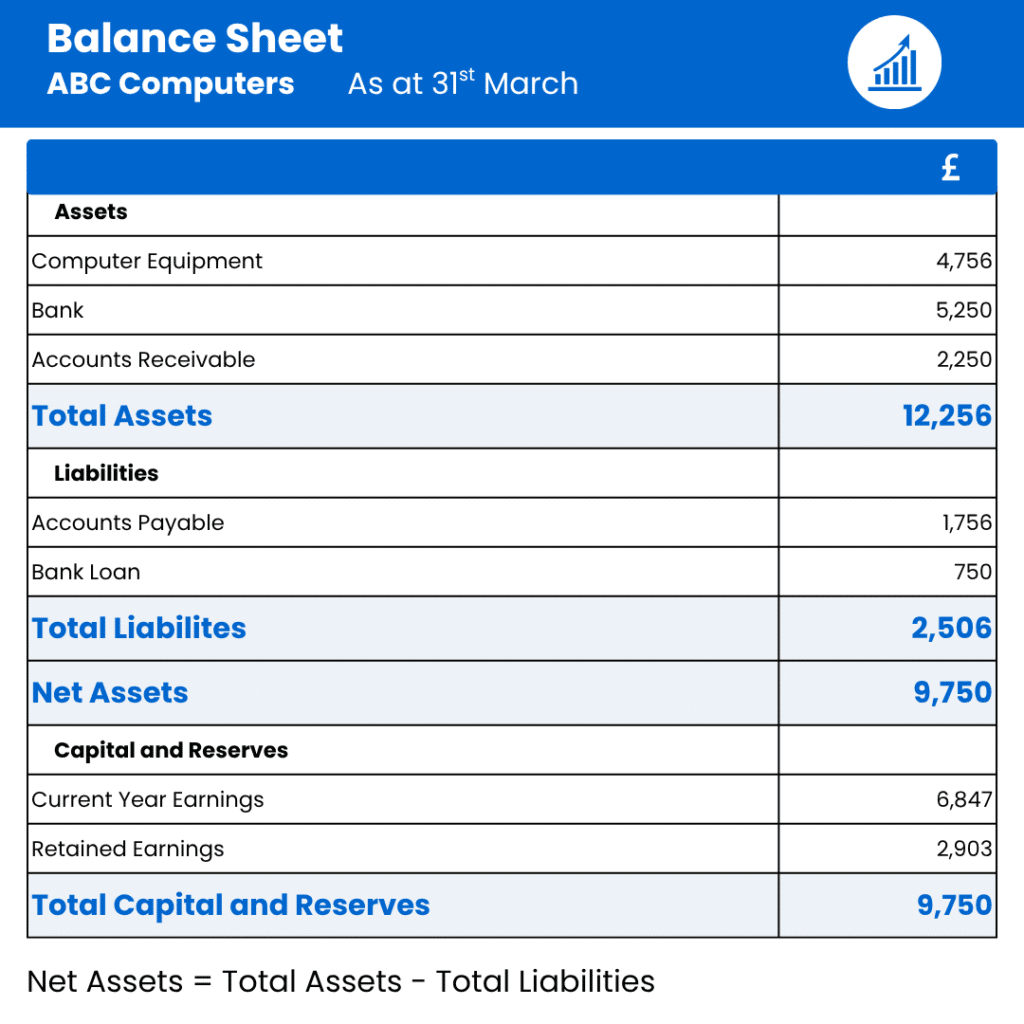
The working capital formula is:
Working Capital = Current Assets − Current Liabilities
Using the above balance sheet as an example, ABC Computers has current assets of £7,500, made up of £5,250 in the bank and £2,250 owed by customers. The £4,756 computer equipment is not included because it is a fixed asset used by the business over the longer term rather than an asset expected to be converted into cash within 12 months.
£7,500 − £2,506 = £4,994
ABC Computers therefore has positive working capital of £4,994.
Remember, £4,994 of working capital does not mean the business has £4,994 sitting in its bank account. In this example, £2,250 of current assets are unpaid customer invoices.
What are Current Assets and Current Liabilities?
Working capital only includes current assets and current liabilities, rather than everything a business owns and owes. In accounting, current generally means amounts expected to be received, used, sold or paid within the next 12 months.
Current Assets
Current assets are short-term assets that are already cash or are expected to be converted into cash or used by the business within 12 months. They typically include:
- Cash and bank balances – money available in business bank accounts.
- Accounts receivable (trade debtors) – money customers owe for unpaid invoices.
- Stock (inventory) – goods held for sale.
- Prepayments – expenses paid in advance that relate to a future accounting period.
Fixed assets such as property, vehicles and equipment are not included in the working capital calculation because they are normally held by the business for longer-term use.
Current Liabilities
Current liabilities are amounts the business expects to pay within the next 12 months. They can include:
- Accounts payable (trade creditors) – unpaid bills from suppliers.
- Tax and VAT due – amounts owed to HMRC.
- Wages and other accrued expenses – costs owed but not yet paid.
- Short-term borrowing – loans and other borrowing due for repayment within 12 months.
Long-term liabilities are not normally included, although any part of a long-term loan that is repayable within the next 12 months may be shown as a current liability.
Understanding what is included is important because using fixed assets or long-term liabilities in the calculation would give an incorrect working capital figure.
Positive and Negative Working Capital
The result of your working capital calculation can be positive or negative, and each tells you something different about the short-term financial position of your business.
Positive Working Capital
Positive working capital means your current assets are greater than your current liabilities. This generally puts the business in a better position to pay suppliers, wages, taxes and other short-term commitments as they become due.
However, a very high level of working capital is not always a sign that a business is using its money effectively. Large amounts of stock or unpaid customer invoices can increase working capital while tying up money that could be used elsewhere in the business.
Negative Working Capital
Negative working capital occurs when current liabilities are greater than current assets. For example, if a business has £15,000 of current assets and £20,000 of current liabilities, its working capital is:
£15,000 − £20,000 = −£5,000
Negative working capital can warn that a business may struggle to meet its short-term commitments. However, it does not always mean a business is in financial difficulty. Some businesses receive payment from customers quickly while paying suppliers later, allowing them to operate successfully with relatively low or negative working capital.
The important thing is to understand why your working capital is positive or negative and whether the business has enough money available when payments are due.
Working Capital Ratio
The working capital ratio, also known as the current ratio, compares current assets with current liabilities. While the working capital calculation gives you an amount in pounds, the ratio shows how many pounds of current assets the business has for every £1 of current liabilities.
The formula is:
Working Capital Ratio = Current Assets ÷ Current Liabilities
Using ABC Computers again:
£7,500 ÷ £2,506 = 2.99
The working capital ratio is therefore 2.99:1. This means ABC Computers has £2.99 of current assets for every £1 of current liabilities.
A ratio above 1 means current assets are greater than current liabilities, while a ratio below 1 means current liabilities are greater than current assets. However, there is no single ideal ratio for every business. What is considered healthy depends on factors such as the type of business, how quickly customers pay and how much stock the business holds.
The ratio should therefore be considered alongside cash flow and other financial information rather than used on its own.
Another measure is the quick ratio, sometimes called the acid-test ratio. It is similar to the current ratio but excludes stock from current assets, as stock may take time to sell and turn into cash. This can provide a more cautious view of whether a business can meet its short-term liabilities.
Working Capital vs Cash Flow
Working capital and cash flow both help you understand the financial health of your business, but they measure different things.
Working capital is a snapshot of your short-term financial position at a specific date. It compares current assets with current liabilities and includes more than just the money in your bank account.
Cash flow tracks the actual movement of money into and out of your business over a period of time. Money comes in from customers and other sources and goes out to pay suppliers, wages, tax and other expenses.
For example, a business might have £20,000 in current assets, but only £3,000 of this may be cash in the bank. The rest could be £12,000 owed by customers and £5,000 held in stock. Although the business has positive working capital, it could still struggle to pay an £8,000 supplier bill due tomorrow.
This is why a profitable business with positive working capital can still experience cash flow problems. Regularly reviewing both working capital and cash flow gives you a clearer picture of whether the business has enough money available to meet its commitments when they fall due.
Planning ahead can help you avoid cash shortages. Our free Cash Flow Forecast template helps you estimate the money coming into and going out of your business, so you can identify periods when cash may be tight and plan for upcoming payments.

Why Working Capital Matters to a Small Business
Good working capital management helps a business meet its everyday financial commitments and continue operating smoothly. Even a profitable business can run into difficulties if it does not have enough money available when bills are due.
Keeping an eye on working capital can help you:
- Pay bills on time – including suppliers, wages, rent, tax and other regular expenses.
- Deal with unexpected costs – providing some flexibility when an unplanned expense arises.
- Manage periods of slower sales – particularly important for seasonal businesses or those with irregular income.
- Plan for growth – additional working capital may be needed to buy stock, take on employees or cover costs before increased sales generate cash. Growing too quickly without enough working capital can lead to overtrading, where a profitable and busy business struggles to meet its bills because cash is tied up funding growth.
- Spot problems early – rising customer debts, excess stock or increasing short-term liabilities can put pressure on the money available to the business.
Working capital can change as the business grows and trading conditions change. Reviewing it monthly alongside your cash flow and management accounts can help you identify potential problems early and make better-informed financial decisions. Businesses with tight cash flow, rapid growth or seasonal trading may need to monitor it more frequently.
How to Improve Working Capital
Improving working capital usually means getting money into the business sooner, avoiding unnecessary tie-ups, and managing when bills need to be paid. Small changes to everyday business processes can make a significant difference.
Invoice Customers Promptly
Send invoices as soon as work is completed or goods are supplied. The sooner an invoice reaches your customer, the sooner the payment process can begin.
Set clear payment terms and make the due date easy to see on every invoice.
Chase Overdue Invoices
Money owed by customers is included in current assets, but you can’t use it to pay bills until it reaches your bank account.
Regular credit control can reduce overdue debts. Send payment reminders when invoices are due and follow up promptly with late-paying customers. If an invoice remains unpaid, a debt collection letter can provide a more formal request for payment.
Manage Stock Levels
Holding too much stock ties up money that could be used elsewhere in the business. Review stock regularly to identify slow-moving items and avoid ordering more than you are likely to need.
At the same time, avoid reducing stock so far that you cannot meet customer demand.
Review Supplier Payment Terms
Where possible, negotiate suitable payment terms with suppliers. Having longer to pay can help you manage the timing of money coming into and leaving the business.
This does not mean deliberately paying suppliers late. Maintaining good supplier relationships and paying within agreed terms remains important.
Keep Control of Spending
Regularly review business expenses and subscriptions to identify costs that are no longer necessary. For larger purchases, consider whether the business has enough working capital to cover the cost without creating pressure elsewhere.
Plan for Larger Payments
Tax bills, VAT, annual insurance and other occasional costs can put sudden pressure on cash. Include these payments in your cash flow forecast and, where possible, set money aside throughout the year.
Use Accounting Software
Keeping your bookkeeping up to date makes it easier to understand your current financial position. Accounting software like Xero or QuickBooks can import bank transactions, track unpaid customer invoices and show which supplier bills are becoming due.
Many accounting packages can also send automatic invoice reminders, helping you follow up with customers and collect money sooner. Up-to-date records and reports make it easier to monitor cash flow and identify potential working capital problems before bills become difficult to pay.
Working Capital FAQs
Working Capital Conclusion
Working capital is a useful way to understand the short-term financial health of your business. By comparing current assets with current liabilities, you can see whether the business has enough resources to meet its everyday commitments.
However, the working capital figure is only part of the picture. Keeping bookkeeping up to date, monitoring cash flow, collecting customer payments promptly and planning upcoming expenses will give you a much clearer understanding of your business finances.
Regularly reviewing working capital can help you spot potential problems early and make better financial decisions.
