Accounts Payable vs Accounts Receivable: Key Differences Explained
Introduction to Accounts Payable and Accounts Receivable
When managing a small business, understanding your cash flow is crucial, and that starts with knowing the difference between accounts payable and accounts receivable. These terms might sound similar, but they represent opposite sides of your finances. Accounts payable is money your business owes to others, while accounts receivable is money owed to you. Knowing how both work helps you stay organised, avoid cash crunches, and keep your books in order.

In this article, we will look at the difference between accounts payable vs accounts receivable, provide details of each process, show journal entry examples, introduce how accounting software can help, and offer free downloads for both.
What is Accounts Payable?
Accounts payable refers to the money your business owes to vendors, suppliers, or service providers. You expect to pay these short-term debts within a specific time, usually 30 to 60 days.
Disclosure: This content may contain affiliate links, which means if you click on them, I may get a commission (without any extra cost to you).
A company’s accounts payable are crucial on its balance sheet as they fall under current liabilities, representing its financial obligations.
Examples of accounts payable:
- Unpaid supplier invoices for inventory, materials, or services purchased
- Utility bills
- Office rent
- Marketing or freelance services
Your balance sheet lists accounts payable under the current liability account, since money needs to be paid soon. Managing accounts payable (AP) well ensures you maintain good vendor relationships and avoid late fees or disruptions.
The Accounts Payable Process (step-by-step)
Managing accounts payable effectively is key to keeping your business running smoothly. The accounts payable process tracks what your business owes and ensures vendors and suppliers are paid on time. A consistent step-by-step approach helps avoid late fees, maintain good relationships, and maintain healthy cash flow. Below is a simple breakdown of how the accounts payable process works from start to finish.
- Receive the Invoice
- The supplier sends an invoice for goods or services.
- Ensure the invoice includes key details: amount, due date, payment terms, and vendor info.
- Verify the Invoice
- Match the invoice with the purchase order (if used) and delivery receipt.
- Check for accuracy—quantities, pricing, and terms.
- Record the Invoice
- Enter the invoice into your accounting system or ledger.
- Categorise the expense (e.g. utilities, office supplies).
- Schedule Payment
- Track the due date to avoid late fees.
- Take advantage of any early payment discounts, if offered.
- Approve the Payment
- Review and authorise payment internally (may involve management approval).
- Make the Payment
- Pay by your chosen method (bank transfer, check, credit card, etc.).
- Record the accounts payable payment and update the vendor balance.
- Reconcile and File
- Confirm the payment has cleared.
- Reconcile with your bank statement.
- File the invoice and proof of payment for your records.
What is Accounts Receivable?
Accounts receivable is the money owed to your business by customers or clients who’ve received goods or services but haven’t paid yet. This usually happens when you offer payment terms such as Net 30 (payment due in 30 days). Maintaining accurate business receivables records is crucial for effective financial management and reporting.
Examples of accounts receivable:
- Unpaid customer invoices
- Outstanding payments for completed projects
- Subscription or service fees are billed in advance
On your balance sheet, accounts receivable are listed under the current asset account, because it’s money you expect to collect soon. Keeping a close eye on accounts receivable (AR) helps maintain a healthy cash flow and ensures your business gets paid on time. Accurate reporting of receivable accounts is essential for the overall financial health of your business.
Accounts Receivable Process (step by step)
The accounts receivable process ensures your business gets paid for your products or services. It starts when you issue an invoice and ends when the payment is received and recorded. A straightforward, organised AR process helps improve the company’s cash flow, reduce overdue accounts, and build trust with your customers. Below is a step-by-step look at how the AR process works.
- Provide the Product or Service
- Deliver what was promised to the customer or client.
- Generate the Invoice
- Create an invoice with clear details: amount due, due date, itemised charges, and payment instructions.
- Ensure timely invoicing to maintain good working relationships with clients and vendors.
- Send the Invoice
- Deliver the invoice via email, mail, or through your accounting software.
- Establish clear credit terms and ways to pay the invoice with customers to facilitate cash flow and maintain strong relationships.
- Track Outstanding Invoices
- Monitor which invoices are unpaid and their due dates using an AR ageing report or accounting system.
- Send Payment Reminders
- If payment hasn’t been made, follow up with friendly reminders before and after the due date.
- Receive the Payment
- Accept payment via your chosen methods (bank transfer, card, check, etc.).
- Record the Payment
- Mark the invoice as paid and update your books.
- Reconcile and File
- Match payments with your bank records and file invoices and receipts for future reference.
Accounts Payable vs Accounts Receivable
While both are essential to your business’s financial health, AP and AR serve opposite roles:
| Feature | Accounts Payable (AP) | Accounts Receivable (AR) |
|---|---|---|
| Money Flow | Money going out | Money coming in |
| Who’s Involved | You owe others (suppliers, vendors) | Others owe you (customers, clients) |
| Balance Sheet Category | Current liability | Current asset |
| Goal | Pay bills on time | Collect payments promptly |
| Impact on Cash Flow | Decreases cash when paid | Increases cash when collected |
Understanding these differences helps you manage both sides of the equation—what’s going out and coming in.
Importance of Accounts Payable and Accounts Receivable
Tracking accounts payable and accounts receivable is vital for maintaining accurate financial records and making smart business decisions. Here’s why both matter:
- Cash Flow Control: Knowing what’s coming in (AR) and going out (AP) helps avoid cash shortages.
- Financial Planning: Proper tracking supports better budgeting, forecasting, and planning for growth.
- Credit Management: Staying on top of accounts payable (AP) helps you maintain good credit with suppliers; managing accounts receivable (AR) ensures customers pay on time.
- Tax and Reporting Accuracy: Keeping up-to-date records makes tax filing easier and more accurate.
- Company’s Financial Health: Effective management of AP and AR is crucial for assessing and ensuring a company’s financial health.
Ignoring either side can lead to late fees, missed payments, or lost income, which can hurt your business.
How Accounts Receivable and Accounts Payable Appear on Financial Statements
Understanding where accounts receivable (AR) and accounts payable (AP) show up on your financial statements helps you see how they affect your business’s financial health.
Balance Sheet
The balance sheet provides a snapshot of your company’s financial position at a specific time. Accounts receivable are listed as current assets, while accounts payable are listed as current liabilities. Accurately recording these transactions in the general ledger is crucial for maintaining a balanced set of financial statements, ensuring clarity in distinguishing between liabilities and assets.
- Accounts Receivable is listed under current assets
→ It represents money your customers owe you.
→ High AR can be good, but if it’s overdue, it may signal cash problems. - Accounts Payable is listed under current liabilities
→ It represents money your business owes to others (e.g. suppliers, vendors).
→ Managing AP well ensures you’re not behind on bills or damaging vendor relationships.
Income Statement
The income statement or profit and Loss, shows your company’s revenues and expenses over a period of time, e.g. month, quarter or year. It helps you understand your profitability. If you use cash basis accounting, it will appear in the sales section when you receive the cash from a customer. Bills for goods or services are recorded as an expense when you pay.
If you use accrual basis accounting, the invoice will appear on the income statement when the transaction occurs, not when cash is received or paid. Accrual accounting shows a more accurate picture of profitability, regardless of actual cash movement.
Cash Flow Statement
The cash flow statement shows the actual movement of money in and out of your business over a specific period. The cash flow statement only records when cash is received or spent.
In relation to accounts receivable and accounts payable:
- Accounts Receivable (AR): Cash is recorded only when a customer pays their invoice.
- Accounts Payable (AP): Cash is recorded only when you pay a supplier or vendor.
So, if you send an invoice in April but the customer pays in May, the income will show in May.
The Role of AP and AR in Cash Flow Management
Good cash management means making sure your business always has enough money on hand to cover expenses, and that’s where accounts payable and accounts receivable play a significant role.
- Accounts Payable (AP): Delaying payments too long can damage supplier relationships, but paying too early can drain your cash. Smart businesses strike a balance—paying on time but not ahead of schedule. Delaying payments can help manage the company’s cash by keeping more funds available for other operational needs.
- Accounts Receivable (AR): The quicker you collect from customers, the stronger your cash account is. Delays in collecting AR can lead to a cash decrease, even if your business is profitable on paper.
Tips for Better Cash Flow:
- Set clear payment terms with customers (e.g. Net 15 or Net 30)
- Follow up on overdue invoices regularly
- Schedule outgoing payments strategically
- Use cash forecasting to plan for high and low periods
By actively managing accounts payable (AP) and accounts receivable (AR), you keep money flowing and reduce the risk of cash crunches that can stall your business.
Journal Entries for Accounts Receivable and Accounts Payable
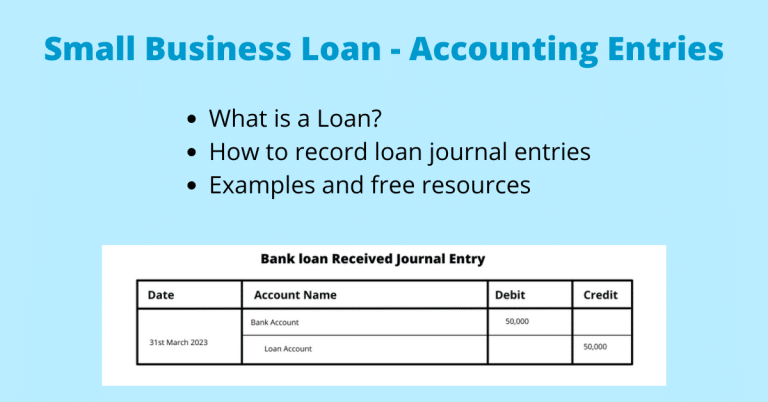
In double-entry bookkeeping, every transaction affects at least two accounts: one debit and one credit. Here’s how AR and AP are recorded.
🧾 1. Accounts Receivable Example
Scenario: You invoice a customer for 500 of services rendered.
Journal Entry:
| Account | Debit | Credit |
| Accounts Receivable | 500 | |
| Sales | 500 |
Explanation:
- You’re recording revenue earned.
- You haven’t been paid yet, so the amount is added to Accounts Receivable (an asset).
When the customer pays:
| Account | Debit | Credit |
| Bank | 500 | |
| Accounts Receivable | 500 |
Explanation:
- You received the payment, so the cash (Bank) increases.
- The receivable is cleared.
🧾 2. Accounts Payable Example
Scenario: You receive a bill from a supplier for 300 of inventory.
Journal Entry:
| Account | Debit | Credit |
| Inventory | 300 | |
| Accounts Payable | 300 |
Explanation:
- Inventory is an asset, so it’s debited.
- You now owe the supplier, so the Accounts Payable account (a liability) is credited.
When you pay the supplier:
| Account | Debit | Credit |
| Accounts Payable | 300 | |
| Bank | 300 |
Explanation:
- You’re settling the debt.
- Cash is reduced, and the payable is cleared.
Accounting Software
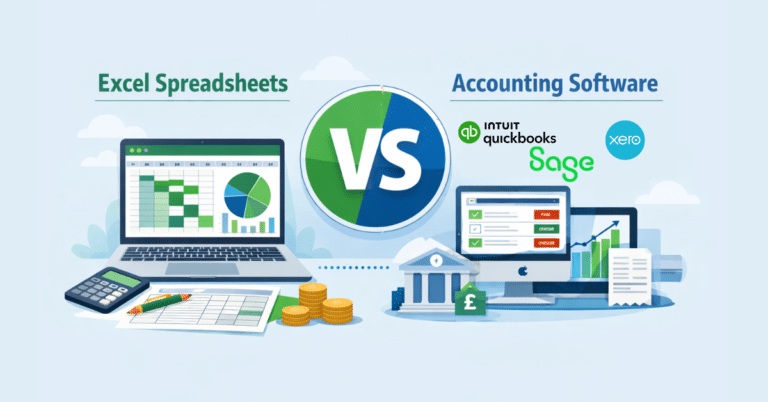
For small business owners, staying on top of finances can feel like a full-time job, but modern cloud-based accounting software makes it easier, faster, and more accurate. Whether managing invoices, tracking expenses, or filing taxes, these tools help streamline your day-to-day bookkeeping and give you a clear view of your cash position.
Accounting software also helps manage invoicing accounts by automating accounts receivable and accounts payable processes, ensuring accurate and timely financial records.
- With features like:
- Secure cloud access to your accounts from any device
- Automatic bank feeds to track income and expenses in real time
- Easy uploading of bills and receipts (scan or email them in)
- Smart invoicing processing and reminders to help you get paid faster
- Built-in VAT tools and MTD (Making Tax Digital) compliance for HMRC
- Financial reporting tools for real-time insights into profit, loss, cash forecasting, and tax obligations
Here are three top UK-based options to consider:
- Xero – Ideal for growing businesses looking for robust features and a clean design. Xero offers unlimited users on most plans and strong AP/AR automation.
- QuickBooks Online – Known for its ease of use, QuickBooks is perfect for small businesses and sole traders who want a quick setup and reliable features.
- Sage Accounting – A long-time favourite in the UK, Sage offers deep accounting capabilities, excellent support, and full HMRC compliance.
Each platform supports Making Tax Digital (MTD) for VAT and self-assessment, helps you stay organised, and saves time during tax season. If possible, separate accounts payable and receivable duties to avoid having the same person manage both, which helps minimise the risks of fraud and errors.
Use Our Free Accounts Payable & Accounts Receivable Templates
We’ve got you covered if you’re not ready to invest in software. You can get started with our free, easy-to-use Excel templates for tracking accounts payable and accounts receivable.
✅ Accounts Payable Template
Stay on top of what you owe by recording supplier invoices, due dates, amounts, and payment status in one place.

✅ Accounts Receivable Ledger Template
Track customer invoices, payment dates, and outstanding balances to help you follow up and improve cash flow.

Accounts Payable vs Accounts Receivable Conclusion
Understanding the difference between accounts payable and accounts receivable—and how they impact your financial statements—is key to managing a healthy, cash-positive business. By staying on top of what you owe and money owed, you’ll improve cash flow, avoid surprises, and make smarter financial decisions.
With the help of cloud-based software like Xero, QuickBooks, or Sage, you can automate tasks, stay compliant with HMRC, and gain real-time insights into your financial health, without needing to be an accountant.
Start small, stay consistent, and let innovation work for you.